I never thought thrift-friendly ingredients could produce Bakery Fresh Bread, and I’m excited to reveal the one pantry trick that made it possible.
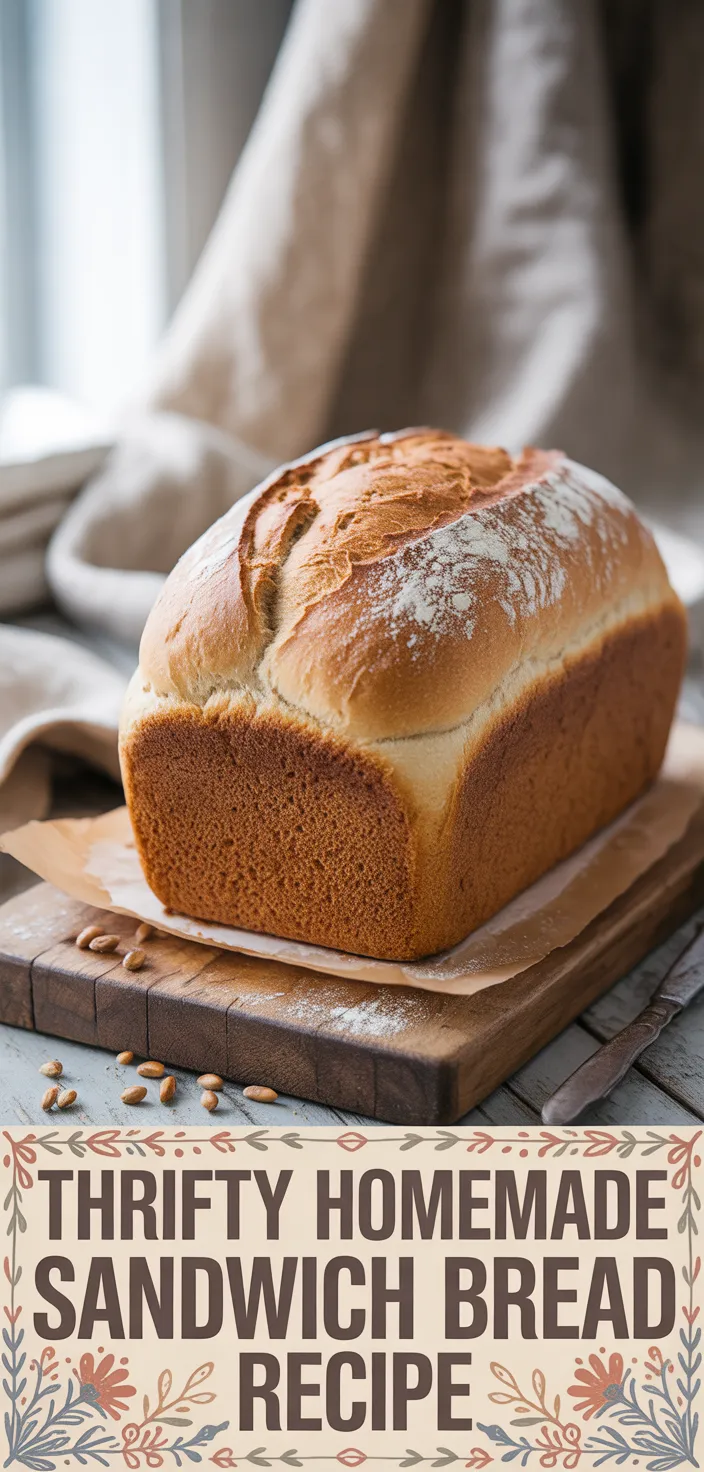
I always thought cheap bread meant cardboard until I tried my Thrifty Homemade Sandwich Bread Recipe from Chicken Scratch Diaries. The way all purpose flour and active dry yeast behave together kinda surprised me, its like a trick you cant believe worked.
This loaf reads like a 6 Ingredient Bread yet somehow gives Bakery Fresh Bread results that fool your friends, at least mine. I wont pretend every single loaf is perfect, sometimes the crust is odd, but most of the time the crumb is soft and worth the fuss.
If you like simple wins and a little kitchen stubbornness, give this one a try.
Ingredients
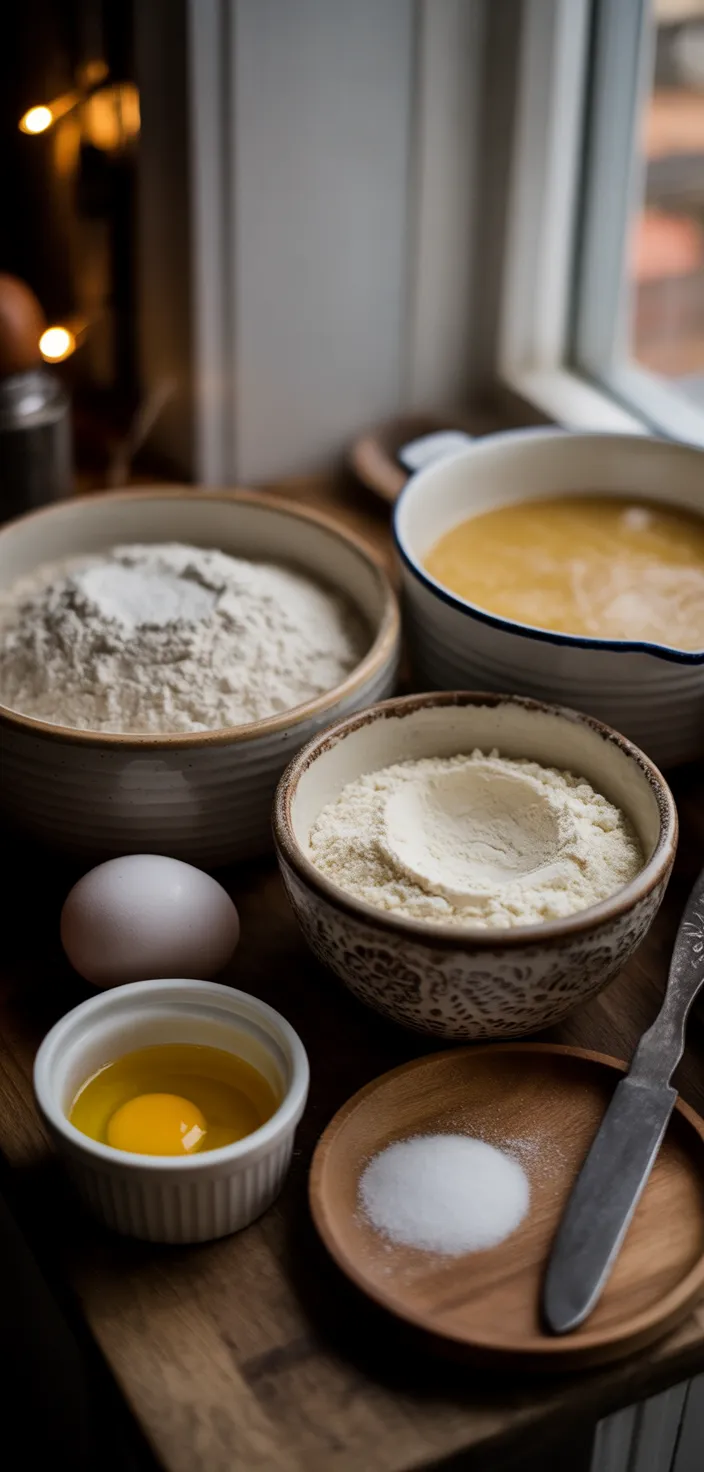
- All purpose flour: Main carbohydrate source, some protein but low fiber, gives structure and chew
- Active dry yeast: Tiny fungi that make bread rise, adds subtle tangy flavor and fermentation aroma
- Warm milk: Adds calcium and protein, makes loaf richer, it helps browning and softer crumb
- Sugar: Feeds yeast for rise, adds mild sweetness and helps crust color
- Salt: Controls yeast activity, boosts flavor and balances sweetness, not healthy in excess
- Oil or melted butter: Adds fat for tenderness, calories go up, butter gives richer flavor
- Egg: Optional but gives protein, richer texture and better browning of the crust
- Warm water: Hydrates dough and helps yeast wake up, no taste but it’s essential for structure
Ingredient Quantities
- 3 to 3 1/2 cups all purpose flour, plus more for dusting
- 1 packet (2 1/4 teaspoons) active dry yeast
- 1 cup warm milk (about 110°F), or reconstituted powdered milk if you got it
- 1/4 cup warm water (about 110°F)
- 2 tablespoons granulated sugar
- 1 1/2 teaspoons salt
- 2 tablespoons vegetable oil or melted butter
- 1 large egg, optional but makes the loaf richer
- 1 tablespoon melted butter for brushing, optional
How to Make this
1. Warm 1 cup milk (about 110°F, reconstituted powdered milk is fine if you got it) and 1/4 cup warm water (about 110°F). In a small bowl stir the 1 packet (2 1/4 tsp) active dry yeast into the warm water with the 2 tablespoons granulated sugar, let sit 5 to 10 minutes until foamy.
2. In a large bowl whisk together 3 cups all purpose flour and 1 1/2 teaspoons salt. Keep the salt away from the yeast when you first combine if you can, it can slow the yeast.
3. Make a well in the flour and pour in the foamy yeast mixture, the warm milk, 2 tablespoons vegetable oil or melted butter, and the optional large egg if you want a richer loaf. Stir with a wooden spoon until a shaggy dough forms. Add the extra 1/2 cup flour only as needed — dough should be soft and slightly tacky, not rock hard.
4. Turn the dough onto a lightly floured surface (use more flour for dusting) and knead 8 to 10 minutes until smooth and elastic. If using a stand mixer knead with the dough hook 5 to 7 minutes. Add tiny pinches of flour only if the dough is unmanageably sticky.
5. Lightly oil a clean bowl, place the dough inside, cover with plastic wrap or a damp towel and let rise in a warm spot until doubled, about 1 to 1 1/2 hours. Don’t rush this step, but don’t let it overproof either or you’ll lose oven spring.
6. Punch the dough down gently to deflate, turn out onto the counter, shape into a loaf by rolling it tight, pinching seams closed. Transfer to a greased 9 x 5 loaf pan or form a round loaf for a baking sheet.
7. Cover and let rise again until puffy and nearly doubled, about 30 to 45 minutes. Preheat oven to 350°F while it finishes the second rise.
8. If you like a soft top, brush with a little milk or beaten egg before baking. Bake 30 to 35 minutes at 350°F until the top is golden brown and the loaf sounds hollow when tapped on the bottom, or internal temp reaches about 190°F. If it browns too fast, tent with foil for the last 10 minutes.
9. Remove from oven and brush with 1 tablespoon melted butter if you want a softer, shinier crust. Let cool in the pan 10 to 15 minutes, then turn out onto a wire rack and cool completely before slicing so it slices clean and doesn’t squash.
Equipment Needed
1. Liquid measuring cup (for the 1 cup milk and 1/4 cup water)
2. Dry measuring cups + measuring spoons (for flour, sugar, salt, yeast)
3. Small bowl (to proof the yeast)
4. Large mixing bowl (to mix the dough)
5. Whisk and wooden spoon or sturdy spatula (whisk for flour/salt, spoon to form shaggy dough)
6. Stand mixer with dough hook optional, or a clean floured counter and bench scraper for kneading by hand
7. 9 x 5 loaf pan or baking sheet, plus a bit of oil or nonstick spray to grease it
8. Pastry brush, plastic wrap or a damp towel, and a wire cooling rack (for second rise, covering and cooling)
FAQ
Thrifty Homemade Sandwich Bread Recipe Substitutions and Variations
- All purpose flour: swap for bread flour 1:1 for a taller, chewier loaf, or replace up to half with whole wheat (add 1 to 2 tbsp extra water because whole wheat soaks more).
- Active dry yeast: use instant/rapid rise yeast 1 3/4 to 2 tsp and mix straight into the dry ingredients so you can skip the proofing step, or if you only got fresh yeast use about 6 to 7 grams crumbled and dissolve in the warm liquid first.
- Warm milk: use any unsweetened plant milk (soy, oat, almond) at the same temp and volume, or just use warm water plus 1 tbsp melted butter or oil per cup to keep the crumb rich.
- Large egg (optional): leave it out, or use a flax “egg” (1 tbsp ground flaxseed + 3 tbsp water, let sit 5 min) for binding, or 1/4 cup applesauce or mashed banana if you don’t mind a touch of sweetness.
Pro Tips
1. Weigh your flour instead of scooping cups. Use about 360 grams for three cups and up to 420 grams for three and a half. Start at the lower end and add a little more only if the dough is too sticky. Too much flour makes the loaf dense, so err on the side of slightly tacky dough.
2. Get the liquids the right temp. Around 105 to 115°F is ideal; hotter will kill the yeast and colder will slow it way down. If your yeast doesn’t get foamy in 8 to 10 minutes, toss it and start over, don’t just add more sugar and hope.
3. Don’t overdo the flour while kneading. Knead until the dough is smooth and passes the windowpane test, or at least feels elastic and springs back. If it’s stubbornly sticky, let it rest 5 to 10 minutes mid-knead to relax the gluten, then finish kneading with tiny pinches of flour.
4. Learn the poke test for proofing and cool fully before slicing. Gently press a finger into the risen dough; if the indentation springs back slowly and not completely, it’s ready. If it snaps back fast you need more rise, and if it stays flat it’s overproofed. After baking, let the loaf cool completely on a rack so the crumb sets, otherwise it’ll be gummy when you slice.
Thrifty Homemade Sandwich Bread Recipe
I never thought thrift-friendly ingredients could produce Bakery Fresh Bread, and I'm excited to reveal the one pantry trick that made it possible.
12
servings
171
kcal
Equipment: 1. Liquid measuring cup (for the 1 cup milk and 1/4 cup water)
2. Dry measuring cups + measuring spoons (for flour, sugar, salt, yeast)
3. Small bowl (to proof the yeast)
4. Large mixing bowl (to mix the dough)
5. Whisk and wooden spoon or sturdy spatula (whisk for flour/salt, spoon to form shaggy dough)
6. Stand mixer with dough hook optional, or a clean floured counter and bench scraper for kneading by hand
7. 9 x 5 loaf pan or baking sheet, plus a bit of oil or nonstick spray to grease it
8. Pastry brush, plastic wrap or a damp towel, and a wire cooling rack (for second rise, covering and cooling)
Ingredients
-
3 to 3 1/2 cups all purpose flour, plus more for dusting
-
1 packet (2 1/4 teaspoons) active dry yeast
-
1 cup warm milk (about 110°F), or reconstituted powdered milk if you got it
-
1/4 cup warm water (about 110°F)
-
2 tablespoons granulated sugar
-
1 1/2 teaspoons salt
-
2 tablespoons vegetable oil or melted butter
-
1 large egg, optional but makes the loaf richer
-
1 tablespoon melted butter for brushing, optional
Directions
- Warm 1 cup milk (about 110°F, reconstituted powdered milk is fine if you got it) and 1/4 cup warm water (about 110°F). In a small bowl stir the 1 packet (2 1/4 tsp) active dry yeast into the warm water with the 2 tablespoons granulated sugar, let sit 5 to 10 minutes until foamy.
- In a large bowl whisk together 3 cups all purpose flour and 1 1/2 teaspoons salt. Keep the salt away from the yeast when you first combine if you can, it can slow the yeast.
- Make a well in the flour and pour in the foamy yeast mixture, the warm milk, 2 tablespoons vegetable oil or melted butter, and the optional large egg if you want a richer loaf. Stir with a wooden spoon until a shaggy dough forms. Add the extra 1/2 cup flour only as needed — dough should be soft and slightly tacky, not rock hard.
- Turn the dough onto a lightly floured surface (use more flour for dusting) and knead 8 to 10 minutes until smooth and elastic. If using a stand mixer knead with the dough hook 5 to 7 minutes. Add tiny pinches of flour only if the dough is unmanageably sticky.
- Lightly oil a clean bowl, place the dough inside, cover with plastic wrap or a damp towel and let rise in a warm spot until doubled, about 1 to 1 1/2 hours. Don’t rush this step, but don’t let it overproof either or you’ll lose oven spring.
- Punch the dough down gently to deflate, turn out onto the counter, shape into a loaf by rolling it tight, pinching seams closed. Transfer to a greased 9 x 5 loaf pan or form a round loaf for a baking sheet.
- Cover and let rise again until puffy and nearly doubled, about 30 to 45 minutes. Preheat oven to 350°F while it finishes the second rise.
- If you like a soft top, brush with a little milk or beaten egg before baking. Bake 30 to 35 minutes at 350°F until the top is golden brown and the loaf sounds hollow when tapped on the bottom, or internal temp reaches about 190°F. If it browns too fast, tent with foil for the last 10 minutes.
- Remove from oven and brush with 1 tablespoon melted butter if you want a softer, shinier crust. Let cool in the pan 10 to 15 minutes, then turn out onto a wire rack and cool completely before slicing so it slices clean and doesn’t squash.
Notes
- Below you’ll find my best estimate of this recipe’s nutrition facts. Treat the numbers as a guide rather than a rule—great food should nourish both body and spirit. Figures are approximate, and the website owner assumes no liability for any inaccuracies in this recipe.
Nutrition Facts
- Serving Size: 73g
- Total number of serves: 12
- Calories: 171kcal
- Fat: 3.8g
- Saturated Fat: 0.9g
- Trans Fat: 0.02g
- Polyunsaturated: 0.7g
- Monounsaturated: 1.7g
- Cholesterol: 18mg
- Sodium: 309mg
- Potassium: 72mg
- Carbohydrates: 29g
- Fiber: 0.9g
- Sugar: 3.3g
- Protein: 4.6g
- Vitamin A: 63IU
- Vitamin C: 0mg
- Calcium: 32mg
- Iron: 1.7mg