
I perfected a Homemade Sandwich Bread that reliably rises extra tall in a single loaf pan and uses simple pantry ingredients, so it yields just one perfect loaf when you only have one pan.
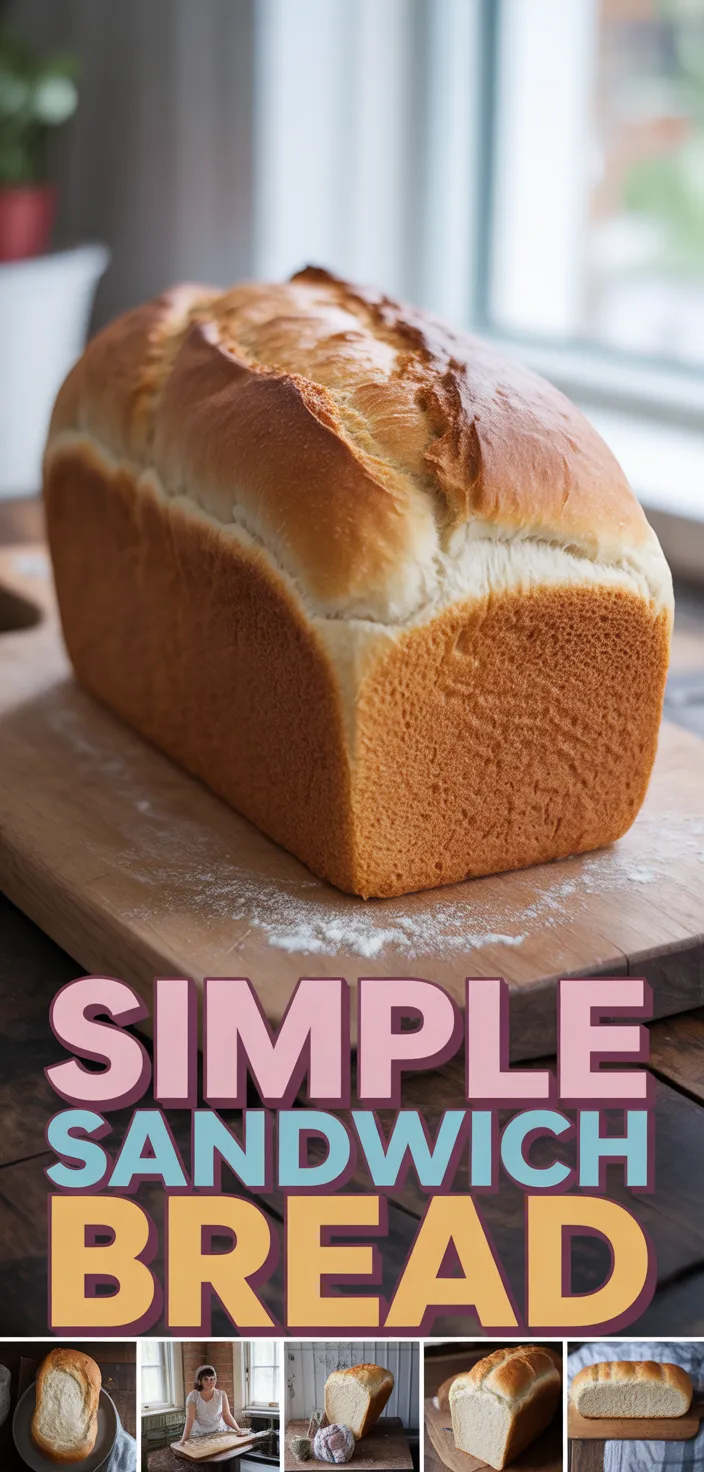
I didn’t mean to get obsessed, but this Simple Sandwich Bread kept pulling me back to the counter. It rises extra tall, has a buttery soft crumb and a chewy crust that makes normal toast feel jealous.
I use warm whole milk and a pat of unsalted butter to get that tender inside without fuss, and somehow it feels like The Best Homemade Sandwich Bread I used to chase online. It’s not fancy, but it’s satisfying in a way Homemade Bread Recipes Easy never fully captured for me.
Try it once and you’ll notice the little things you can’t stop thinking about.
Ingredients
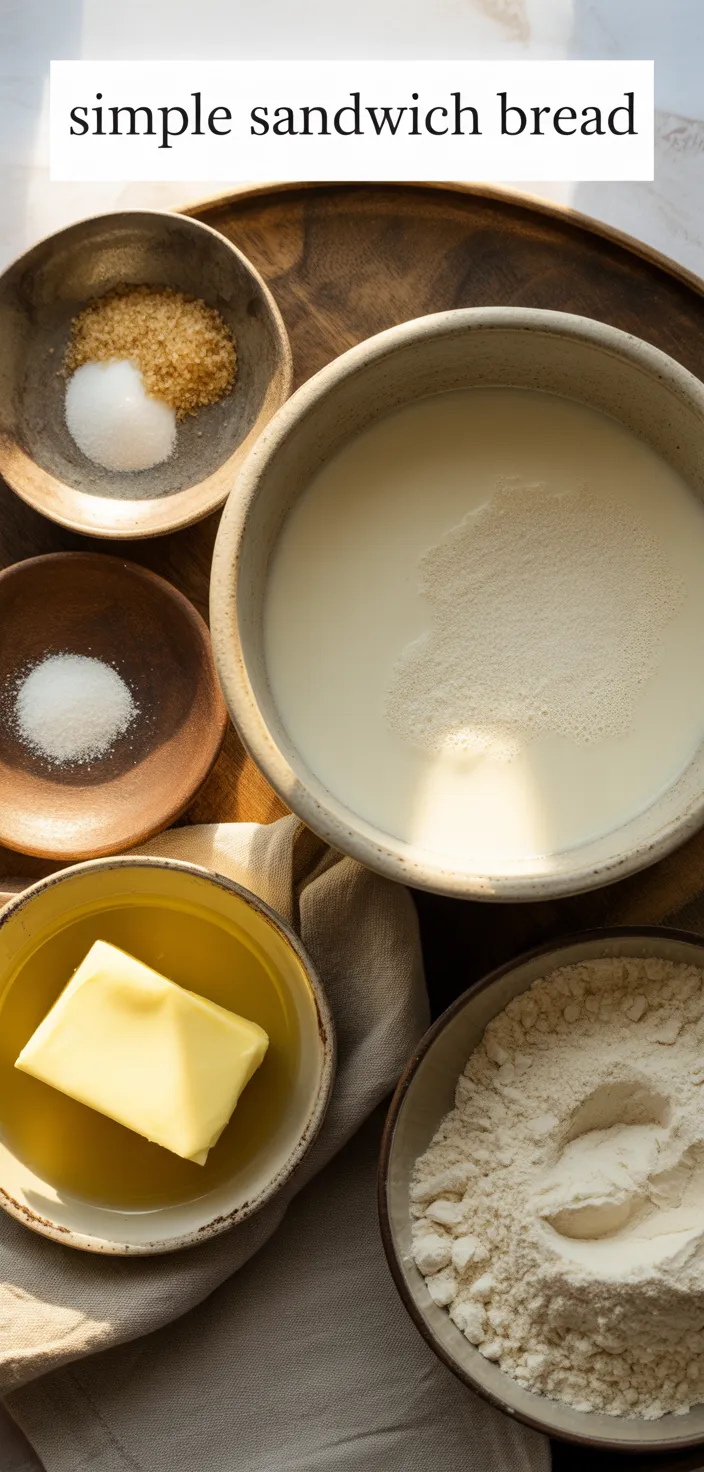
- Adds calcium, vitamin D, some protein and fat, keeps crumb soft and moist, it’s nice.
- Living yeast cells that create CO2 for rise, they add a mild fermented taste.
- Feeds yeast during proofing, gives sweetness, helps crust brown and tastes pleasant.
- Adds rich flavor and tender texture, contributes fat, minimal fibre or carbs though.
- Boosts flavor, tightens gluten structure a little and slows yeast, not sweet though.
- Main carbohydrate and gluten source, builds loaf structure, moderate protein, low fiber.
Ingredient Quantities
- 1 1/4 cups (300 ml) whole milk, warmed to about 105 to 115°F
- 2 1/4 teaspoons active dry yeast (1 packet)
- 2 tablespoons granulated sugar
- 2 tablespoons unsalted butter, melted
- 1 1/2 teaspoons fine salt
- 3 to 3 1/2 cups (360 to 420 g) all purpose flour
How to Make this
1. Warm the 1 1/4 cups (300 ml) whole milk to about 105 to 115°F, pour into a bowl, sprinkle 2 1/4 teaspoons active dry yeast and 2 tablespoons granulated sugar over it, stir once and let sit 5 to 10 minutes until foamy.
2. Stir in 2 tablespoons melted unsalted butter and all of the 1 1/2 teaspoons fine salt so the liquid is evenly seasoned.
3. Add 3 cups of the all purpose flour and mix with a wooden spoon until a shaggy dough forms; if it is still too sticky to handle, add up to the remaining 1/2 cup flour a little at a time until the dough pulls away from the bowl but is still slightly tacky. dont overdo the flour or the loaf will be dry.
4. Turn the dough onto a lightly floured surface and knead by hand about 6 to 8 minutes until smooth and elastic, or knead in a stand mixer with the dough hook 4 to 5 minutes. Tip: do the windowpane test to check elasticity, if it stretches thin without tearing its ready.
5. Lightly oil a clean bowl, place the dough inside, cover with plastic wrap or a damp towel, and proof in a warm spot until doubled in size, about 60 to 90 minutes. A trick: put the covered bowl in the oven with just the oven light on to keep it cozy.
6. Gently punch the risen dough down, turn it out, shape into a tight loaf by flattening into a rectangle then rolling up snugly, pinch the seam and tuck the ends under.
7. Place the shaped loaf seam-side down into a greased 9×5 inch loaf pan, cover and let rise again until it reaches about 1 inch above the rim or looks nearly doubled, roughly 45 to 60 minutes.
8. Preheat oven to 350°F (175°C). Right before baking you can brush the top lightly with milk for color if you want, then bake 30 to 35 minutes until the top is deep golden and the internal temp is about 190 to 200°F or it sounds hollow when tapped.
9. Remove the bread from the oven, immediately brush the top with a little more melted butter for a soft, shiny crust, let the loaf rest in the pan 10 minutes then transfer to a wire rack to cool at least 20 to 30 minutes before slicing so the crumb sets.
Equipment Needed
1. Heat-safe liquid measuring cup or small saucepan to warm the milk to about 105 to 115°F
2. Instant-read thermometer to check milk temp and the finished loaf (aim 190 to 200°F)
3. Large mixing bowl for combining and proofing the dough
4. Wooden spoon or stiff silicone spatula to mix the shaggy dough
5. Stand mixer with dough hook (optional) or just your hands for kneading by hand
6. Bench scraper or stiff spatula to help turn, divide and shape the dough
7. Greased 9×5 inch loaf pan for baking
8. Plastic wrap or a damp kitchen towel to cover the dough while it rises (you can also use the oven light trick to keep it warm)
9. Pastry brush for brushing milk and melted butter, plus a wire cooling rack to let the loaf rest and cool
FAQ
Simple Sandwich Bread Recipe Substitutions and Variations
- Whole milk: swap for 2% or skim milk (same amount, loaf will be a bit less rich); or use buttermilk for a tangy crumb (same volume, expect slightly tighter texture); or mix 1 1/4 cups warm water with 3 tbsp nonfat dry milk to mimic whole milk.
- Active dry yeast: replace with instant yeast at about 2 tsp and mix straight into the flour no proofing needed; or use fresh baker’s yeast at roughly 3 times the weight of active dry (about 21 g fresh for one 7 g packet).
- Granulated sugar: use packed light brown sugar 1 for 1 for a deeper flavor; or swap in 1 1/2 tbsp honey or maple syrup for 2 tbsp sugar but cut the milk by about 1 to 2 tbsp since those are liquid sweeteners.
- All purpose flour: use bread flour 1 for 1 for a higher rise and chewier crumb; or replace up to 1 cup with whole wheat flour for nuttier flavor (add 1 to 2 tbsp extra liquid and expect a denser loaf); for gluten free use a commercial 1 to 1 gluten free blend and add xanthan gum per package directions.
Pro Tips
– Always weigh your flour if you can, or at least spoon and level it into the measuring cup. Too much flour is the number one reason bread comes out dry, so aim for the lower end of the flour range and stop adding as soon as the dough pulls away but still feels a little tacky.
– Test the yeast bloom then trust it, if it doesn’t get frothy in 10 minutes toss it and try new yeast, most problems start here. If your kitchen is cold, put the covered bowl in the oven with the light on or on top of a warm (not hot) appliance; but watch the rise, overproofed dough will collapse and make a flat loaf.
– Learn the windowpane test and use it instead of counting minutes while kneading, it tells you when gluten is actually developed; if the dough resists stretch, let it rest 5 to 10 minutes then try again, that little bench rest helps a lot. Using a stand mixer is fine and faster but don’t overmix, it can break down the dough and make the crumb gummy.
– Use an instant read thermometer to check doneness, aim for about 190 to 200°F in the center, and brush with melted butter right out of the oven for a soft shiny crust. Let the loaf cool on a rack at least 20 to 30 minutes before slicing or you’ll get gummy slices, patience pays off.
Simple Sandwich Bread Recipe
I perfected a Homemade Sandwich Bread that reliably rises extra tall in a single loaf pan and uses simple pantry ingredients, so it yields just one perfect loaf when you only have one pan.
12
servings
158
kcal
Equipment: 1. Heat-safe liquid measuring cup or small saucepan to warm the milk to about 105 to 115°F
2. Instant-read thermometer to check milk temp and the finished loaf (aim 190 to 200°F)
3. Large mixing bowl for combining and proofing the dough
4. Wooden spoon or stiff silicone spatula to mix the shaggy dough
5. Stand mixer with dough hook (optional) or just your hands for kneading by hand
6. Bench scraper or stiff spatula to help turn, divide and shape the dough
7. Greased 9×5 inch loaf pan for baking
8. Plastic wrap or a damp kitchen towel to cover the dough while it rises (you can also use the oven light trick to keep it warm)
9. Pastry brush for brushing milk and melted butter, plus a wire cooling rack to let the loaf rest and cool
Ingredients
-
1 1/4 cups (300 ml) whole milk, warmed to about 105 to 115°F
-
2 1/4 teaspoons active dry yeast (1 packet)
-
2 tablespoons granulated sugar
-
2 tablespoons unsalted butter, melted
-
1 1/2 teaspoons fine salt
-
3 to 3 1/2 cups (360 to 420 g) all purpose flour
Directions
- Warm the 1 1/4 cups (300 ml) whole milk to about 105 to 115°F, pour into a bowl, sprinkle 2 1/4 teaspoons active dry yeast and 2 tablespoons granulated sugar over it, stir once and let sit 5 to 10 minutes until foamy.
- Stir in 2 tablespoons melted unsalted butter and all of the 1 1/2 teaspoons fine salt so the liquid is evenly seasoned.
- Add 3 cups of the all purpose flour and mix with a wooden spoon until a shaggy dough forms; if it is still too sticky to handle, add up to the remaining 1/2 cup flour a little at a time until the dough pulls away from the bowl but is still slightly tacky. dont overdo the flour or the loaf will be dry.
- Turn the dough onto a lightly floured surface and knead by hand about 6 to 8 minutes until smooth and elastic, or knead in a stand mixer with the dough hook 4 to 5 minutes. Tip: do the windowpane test to check elasticity, if it stretches thin without tearing its ready.
- Lightly oil a clean bowl, place the dough inside, cover with plastic wrap or a damp towel, and proof in a warm spot until doubled in size, about 60 to 90 minutes. A trick: put the covered bowl in the oven with just the oven light on to keep it cozy.
- Gently punch the risen dough down, turn it out, shape into a tight loaf by flattening into a rectangle then rolling up snugly, pinch the seam and tuck the ends under.
- Place the shaped loaf seam-side down into a greased 9×5 inch loaf pan, cover and let rise again until it reaches about 1 inch above the rim or looks nearly doubled, roughly 45 to 60 minutes.
- Preheat oven to 350°F (175°C). Right before baking you can brush the top lightly with milk for color if you want, then bake 30 to 35 minutes until the top is deep golden and the internal temp is about 190 to 200°F or it sounds hollow when tapped.
- Remove the bread from the oven, immediately brush the top with a little more melted butter for a soft, shiny crust, let the loaf rest in the pan 10 minutes then transfer to a wire rack to cool at least 20 to 30 minutes before slicing so the crumb sets.
Notes
- Below you’ll find my best estimate of this recipe’s nutrition facts. Treat the numbers as a guide rather than a rule—great food should nourish both body and spirit. Figures are approximate, and the website owner assumes no liability for any inaccuracies in this recipe.
Nutrition Facts
- Serving Size: 62.7g
- Total number of serves: 12
- Calories: 158kcal
- Fat: 3.03g
- Saturated Fat: 1.67g
- Trans Fat: 0.08g
- Polyunsaturated: 0.07g
- Monounsaturated: 0.59g
- Cholesterol: 7.5mg
- Sodium: 306mg
- Potassium: 73mg
- Carbohydrates: 28g
- Fiber: 0.88g
- Sugar: 3.28g
- Protein: 4.05g
- Vitamin A: 27.5IU
- Vitamin C: 0mg
- Calcium: 36.7mg
- Iron: 1.17mg