I’m sharing my Homemade Easy Cookies recipe for chewy brown sugar cookies that are soft, thick, and full of deep molasses flavor, the kind of simple treat that quickly becomes a family favorite.

I didn’t expect these Chewy Brown Sugar Cookies to become my go to, but they did. They’re soft, thick and kinda improbably chewy, with a deep molasses note that sneaks up on you and keeps you reaching for one more.
I love how packed light brown sugar gives them a caramel like backbone while a splash of molasses adds that old fashioned depth, nothing here is fussy. If you’ve ever wondered What Can I Make With Brown Sugar, try these, they’re impossible to resist and perfect for when you need a small selfish dessert.
Why I Like this Recipe
– I like how its forgiving even when I rush, so I still end up with something tasty.
– I like that it’s quick enough after work but still feels like a treat, so I don’t gotta choose between tired and fancy.
– I like that my kids can help and it usually turns out good, so we have fun without a big mess.
– I like the cozy smell that fills the house, makes everything feel warm and homey.
Ingredients
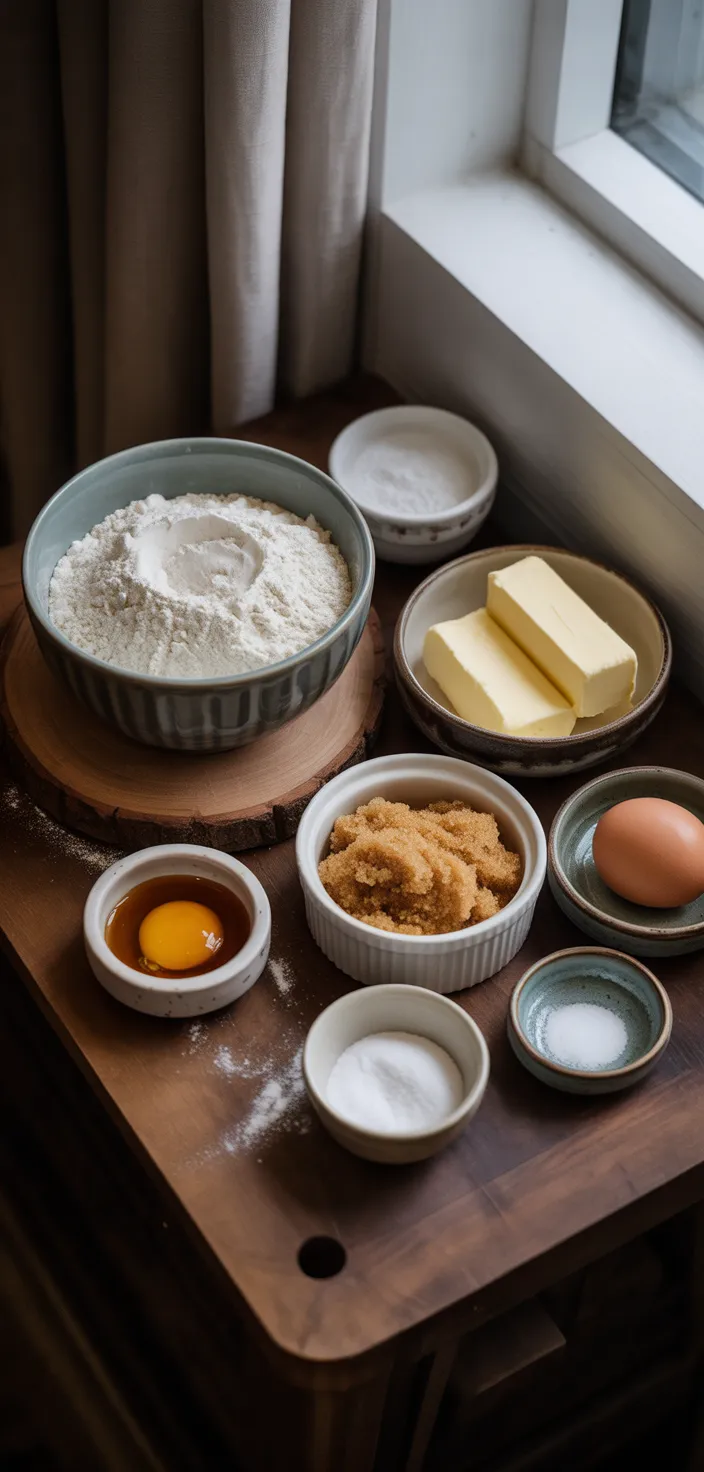
- All purpose flour: main carbohydrate, builds structure, little protein, can make cookies chewy
- Cornstarch: optional, makes em extra tender, soft crumb by limiting gluten formation
- Brown sugar: keeps cookies moist, caramel flavor, adds simple carbs and some minerals
- Molasses: deepens flavor, concentrated sugars and minerals, adds chew and dark richness
- Butter: fat for tenderness and flavor, contributes to crisp edges when browned
- Egg and yolk: binders, give protein and moisture, yolk adds richer, chewier texture
- Baking soda: gentle leavening, helps spread and browning by raising dough pH
- Vanilla extract: flavor booster, negligible nutrients, makes sweetness feel warmer and rounded
Ingredient Quantities
- 2 1/4 cups (280 g) all purpose flour
- 2 teaspoons cornstarch (optional, makes em extra tender)
- 1 teaspoon baking soda
- 1/2 teaspoon fine salt
- 1/2 cup (113 g) unsalted butter, softened
- 1 1/4 cups (250 g) packed light brown sugar packed
- 1 tablespoon molasses for that deep flavor
- 1 large egg plus 1 large egg yolk
- 2 teaspoons vanilla extract
How to Make this
1. Preheat oven to 350 F (175 C) and line a baking sheet with parchment paper or a silicone mat, then set aside.
2. Whisk together 2 1/4 cups (280 g) all purpose flour, 2 teaspoons cornstarch (optional), 1 teaspoon baking soda and 1/2 teaspoon fine salt in a bowl so it’s evenly mixed.
3. In a large bowl beat 1/2 cup (113 g) softened unsalted butter with 1 1/4 cups (250 g) packed light brown sugar until it’s lighter in color and a bit fluffy, about 2 to 3 minutes; you don’t need it perfectly pillowy, just well combined.
4. Add 1 tablespoon molasses to the butter-sugar mix and beat until incorporated, then add 1 large egg plus 1 large egg yolk and 2 teaspoons vanilla extract; mix until smooth but try not to overbeat.
5. Fold the dry ingredients into the wet with a spatula until just combined; stop when you no longer see streaks of flour, a few small bits of flour are fine.
6. Chill the dough for at least 30 minutes in the fridge (longer is fine, up to 2 hours). Chilling firms the dough so cookies stay thick and chewy and don’t spread too much.
7. Scoop dough into 2 tablespoon-sized balls (or use a medium cookie scoop), roll if you like, and place on the prepared sheet about 2 inches apart. If the dough is sticky, chill scooped balls 10 minutes before baking.
8. Bake at 350 F (175 C) for 9 to 12 minutes, until edges are set and tops look slightly underbaked. For extra chew keep the lower end of that time range, for slightly more set centers go a minute or two longer.
9. Let cookies cool on the baking sheet for 5 to 10 minutes so they finish cooking and firm up, then transfer to a wire rack to cool completely. If you try to move them right away they’ll fall apart.
10. Tips and quick fixes: measure flour by spooning into the cup and leveling it so cookies stay tender; cornstarch makes them extra soft; use room temperature eggs and butter for even mixing; if cookies spread too much chill the dough longer or add a tablespoon of flour; store cooled cookies in an airtight container for up to 3 days or freeze for longer.
Equipment Needed
1. Oven (preheat to 350 F / 175 C)
2. Baking sheet lined with parchment paper or a silicone baking mat
3. Mixing bowls (one large for wet, one medium for dry)
4. Measuring cups and spoons plus a kitchen scale, grams really help so you dont overpack the flour
5. Electric mixer (hand or stand) or a sturdy wooden spoon for creaming the butter and sugar
6. Rubber spatula and a whisk for mixing and folding
7. Cookie scoop (2 tablespoon) or a tablespoon and your hands to portion and roll the dough
8. Wire cooling rack and a small tray or plate for chilling scooped dough if it gets sticky
FAQ
Chewy Brown Sugar Cookies Recipe Substitutions and Variations
- All purpose flour (2 1/4 cups): swap for 2 1/4 cups gluten-free 1-to-1 all purpose blend (with xanthan gum). They’ll be a bit more crumbly but still tasty.
- Unsalted butter (1/2 cup): use 1/2 cup salted butter and cut the recipe salt to 1/4 tsp, or use 1/2 cup vegetable shortening 1 to 1 for a chewier cookie that spreads less.
- Light brown sugar (1 1/4 cups) + molasses: replace the light brown with 1 1/4 cups dark brown sugar for deeper flavor. If you dont have brown sugar, use 1 cup granulated sugar + 3 tbsp molasses instead.
- 1 large egg + 1 yolk: for an egg-free swap mix 1 1/2 tbsp ground flax with 4 1/2 tbsp water, let sit 5 minutes till gelled. Cookies may be slightly denser.
Pro Tips
1. Weigh or properly spoon and level your flour instead of scooping with the cup, otherwise the dough goes too stiff and the cookies end up dry.
2. Chill the dough until it’s firm to the touch; softer butter or warm dough = more spread. If they still spread, chill scooped balls 15 to 30 minutes before baking.
3. For extra tender, almost melt-in-your-mouth texture add the cornstarch and consider an extra egg yolk or take them out a little early so centers stay chewy.
4. Right after they come out of the oven sprinkle a pinch of flaky sea salt on top and let them cool on the sheet for several minutes so they finish setting without falling apart.
Chewy Brown Sugar Cookies Recipe
My favorite Chewy Brown Sugar Cookies Recipe
Equipment Needed:
1. Oven (preheat to 350 F / 175 C)
2. Baking sheet lined with parchment paper or a silicone baking mat
3. Mixing bowls (one large for wet, one medium for dry)
4. Measuring cups and spoons plus a kitchen scale, grams really help so you dont overpack the flour
5. Electric mixer (hand or stand) or a sturdy wooden spoon for creaming the butter and sugar
6. Rubber spatula and a whisk for mixing and folding
7. Cookie scoop (2 tablespoon) or a tablespoon and your hands to portion and roll the dough
8. Wire cooling rack and a small tray or plate for chilling scooped dough if it gets sticky
Ingredients:
- 2 1/4 cups (280 g) all purpose flour
- 2 teaspoons cornstarch (optional, makes em extra tender)
- 1 teaspoon baking soda
- 1/2 teaspoon fine salt
- 1/2 cup (113 g) unsalted butter, softened
- 1 1/4 cups (250 g) packed light brown sugar packed
- 1 tablespoon molasses for that deep flavor
- 1 large egg plus 1 large egg yolk
- 2 teaspoons vanilla extract
Instructions:
1. Preheat oven to 350 F (175 C) and line a baking sheet with parchment paper or a silicone mat, then set aside.
2. Whisk together 2 1/4 cups (280 g) all purpose flour, 2 teaspoons cornstarch (optional), 1 teaspoon baking soda and 1/2 teaspoon fine salt in a bowl so it’s evenly mixed.
3. In a large bowl beat 1/2 cup (113 g) softened unsalted butter with 1 1/4 cups (250 g) packed light brown sugar until it’s lighter in color and a bit fluffy, about 2 to 3 minutes; you don’t need it perfectly pillowy, just well combined.
4. Add 1 tablespoon molasses to the butter-sugar mix and beat until incorporated, then add 1 large egg plus 1 large egg yolk and 2 teaspoons vanilla extract; mix until smooth but try not to overbeat.
5. Fold the dry ingredients into the wet with a spatula until just combined; stop when you no longer see streaks of flour, a few small bits of flour are fine.
6. Chill the dough for at least 30 minutes in the fridge (longer is fine, up to 2 hours). Chilling firms the dough so cookies stay thick and chewy and don’t spread too much.
7. Scoop dough into 2 tablespoon-sized balls (or use a medium cookie scoop), roll if you like, and place on the prepared sheet about 2 inches apart. If the dough is sticky, chill scooped balls 10 minutes before baking.
8. Bake at 350 F (175 C) for 9 to 12 minutes, until edges are set and tops look slightly underbaked. For extra chew keep the lower end of that time range, for slightly more set centers go a minute or two longer.
9. Let cookies cool on the baking sheet for 5 to 10 minutes so they finish cooking and firm up, then transfer to a wire rack to cool completely. If you try to move them right away they’ll fall apart.
10. Tips and quick fixes: measure flour by spooning into the cup and leveling it so cookies stay tender; cornstarch makes them extra soft; use room temperature eggs and butter for even mixing; if cookies spread too much chill the dough longer or add a tablespoon of flour; store cooled cookies in an airtight container for up to 3 days or freeze for longer.